As someone who's recently navigated the world of vision correction, I wanted to share my experience choosing between progressive lenses and distance-only glasses. It can be a confusing decision, and I hope my story can help you make the right choice for your eyes. It all started when I noticed I was struggling to read things up close.
It crept up on me gradually. I realized that reading menus in dimly lit restaurants was becoming a challenge. I found myself holding books further and further away to get the words into focus. It wasn't just books; my computer screen started to blur after a while, too. I knew it was time to revisit the eye doctor. During a routine eye exam, the doctor noticed I was having trouble reading clearly. It was a new development, and we needed to figure out the best solution.
My eye doctor presented me with two main options: distance-only glasses and progressive lenses. Distance-only glasses would correct my vision for seeing things far away, which I already needed. Progressive lenses, on the other hand, would correct my distance vision and provide a reading correction in the lower portion of the lens. It sounded convenient, but I had some reservations.
I was worried about adapting to progressive lenses. I'd heard stories about people experiencing dizziness or struggling with their peripheral vision. Plus, I wasn't sure if I really needed them yet. I could still manage by taking off my glasses to read or use the computer. Was it worth the potential hassle?
I started asking around and doing some research. One piece of advice that stuck with me was to ask myself some key questions: Can I read a book with normal print without holding it far away? Are the letters clear? Do I experience eye strain? Do I wish the print was clearer? Answering "yes" to any of these pointed towards trying progressives. Another helpful point was that getting used to progressives is easier when you start with a lower add power. My add power was relatively low, around +1.25, which made me feel more confident about trying them.
Here's a breakdown of the pros and cons I considered:
Ultimately, I decided to try progressive lenses. The convenience of having clear vision at all distances appealed to me. The idea of not having to constantly switch between glasses seemed like a game-changer. Plus, the fact that my add power was relatively low gave me hope that I could adapt quickly.
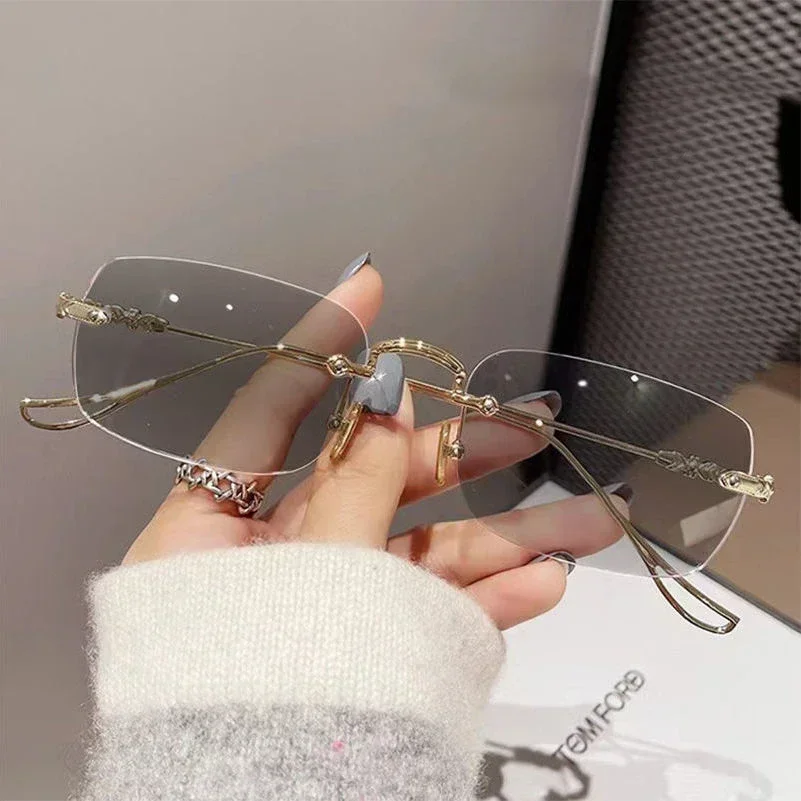
Once I made the decision, it was time to find the right frames and lenses. I was particularly drawn to frameless options. I even came across these Women Photochromic Reading Glasses. They looked stylish and comfortable, and the photochromic feature (the lenses darken in sunlight) was a bonus. I ended up choosing a similar style, prioritizing comfort and a good fit. I'm always looking for ways to simplify my life and improve my style, and I felt like these glasses could do both.
I found that a proper fitting is crucial for progressive lenses. I remember someone mentioning that finding a Warby Parker store to get precise measurements can make a big difference. Although I didn't go to Warby Parker, I made sure the optician took careful measurements to ensure the lenses were positioned correctly in the frames. This is key to minimizing distortion and maximizing comfort.